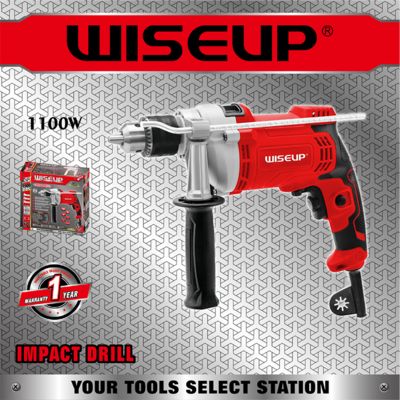
Understanding Concrete Drilling Mechanics
One of the most common mistakes DIYers and contractors make is using a standard impact drill to bore large anchor holes into high-density reinforced concrete lintels. After 15 minutes of strenuous pushing, the drill bit is smoking red-hot and the hole is barely an inch deep. Here is why the mechanism matters.
1. How Standard Impact Drills Work
An impact drill uses two ribbed clutch plates that slide over each other as the chuck rotates. This produces very rapid, shallow clicks (up to 30,000 impacts per minute), but with very low impact energy (fractions of a Joule). It relies heavily on physical hand pressure from the user.
Best used for: Red brick, mortar, hollow blocks, timber, and sheet metal.
2. How SDS-Plus Rotary Hammers Work
Rotary hammers use a pneumatic piston driven by a crankshaft. The air piston compresses air against a striker that directly hammers the anvil of the SDS drill bit. It delivers true impact energy (typically 2.5 to 5.0 Joules per strike) without needing you to push your body weight against the tool.
Best used for: Foundation concrete, stone, heavy anchor bolts, plumbing core holes, and light chiseling/demolition.